'/%3E%3C/svg%3E)


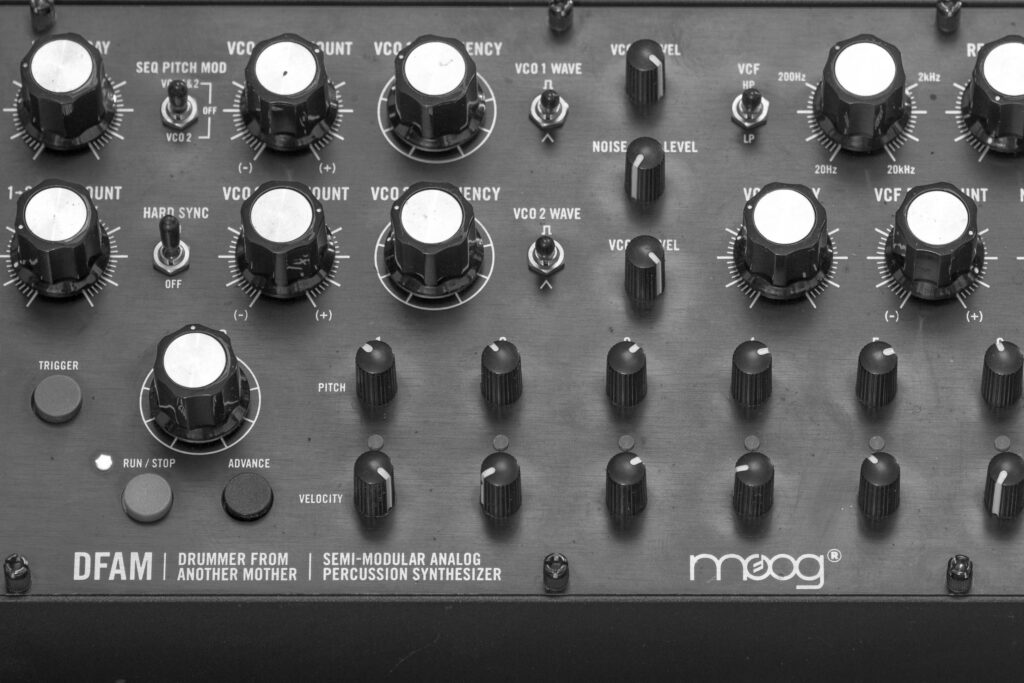
Moog’s DFAM (Drummer From Another Mother) is a fascinating semi-modular machine that needs no introduction — but syncing it with other gear can quickly turn into a headache.
The DFAM’s core issue: no native MIDI
Unlike most modern gear, the DFAM has no built-in MIDI connectivity — no DIN MIDI input, no USB MIDI. It communicates exclusively through analogue voltage signals (CV/Gate), which fits the Eurorack modular philosophy, but creates an immediate barrier as soon as you want to integrate it into a more conventional setup. Even in a fully analogue system, the lack of a RESET input is painfully apparent.
An internal sequencer with no reset
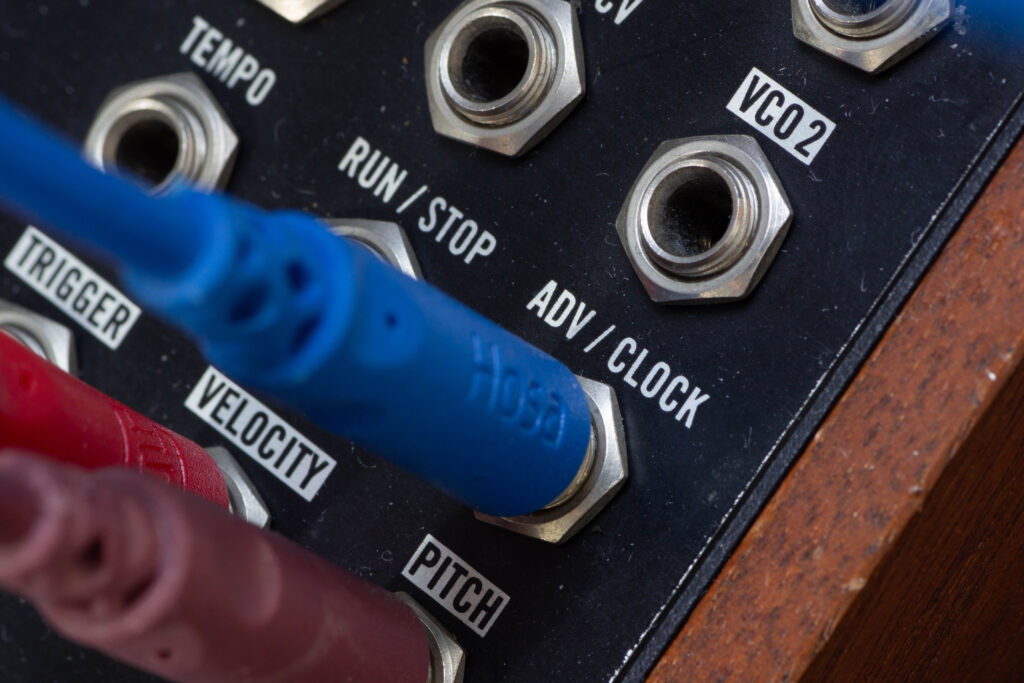
The DFAM includes its own 8-step sequencer, and it does have a Run/Stop input to start and stop it from an external source. But it’s missing the crucial piece: a Reset input. Without it, there’s no way to force the sequencer to return to step 1 exactly when you need it — for example, when starting the transport in a DAW. The DFAM simply resumes from wherever it stopped, creating unpredictable phase offsets that make arranging and structuring things pretty hit-or-miss.
The birth of THRALL: from prototype to solution
Before thinking about a product, there was a simple question: does it really work?
The answer came from a homemade Eurorack module based on Arduino, running a minimal firmware — no fancy architecture, just the bare essentials to get usable synchronisation. The result was immediate. So immediate, in fact, that this rough prototype stayed in my setup for quite a while. As often happens: what works tends to stick.
But the more I used it, the more obvious it became — the idea deserved better than a bit of code hidden inside a generic module. It deserved a dedicated tool, designed from the ground up for this job: straight-to-the-point ergonomics, uncompromising reliability, and a clear place in a system.
That maturation is what gave birth to THRALL. Not a revolution — more the step from “it works, it’s cool” to something clean and stable. A bridge between the synchronised world of MIDI and the DFAM’s more organic behaviour.
The obsession that guided the development is simple: make sure that when you hit Start, everything starts together — and then the music can take over.

Leave a Reply